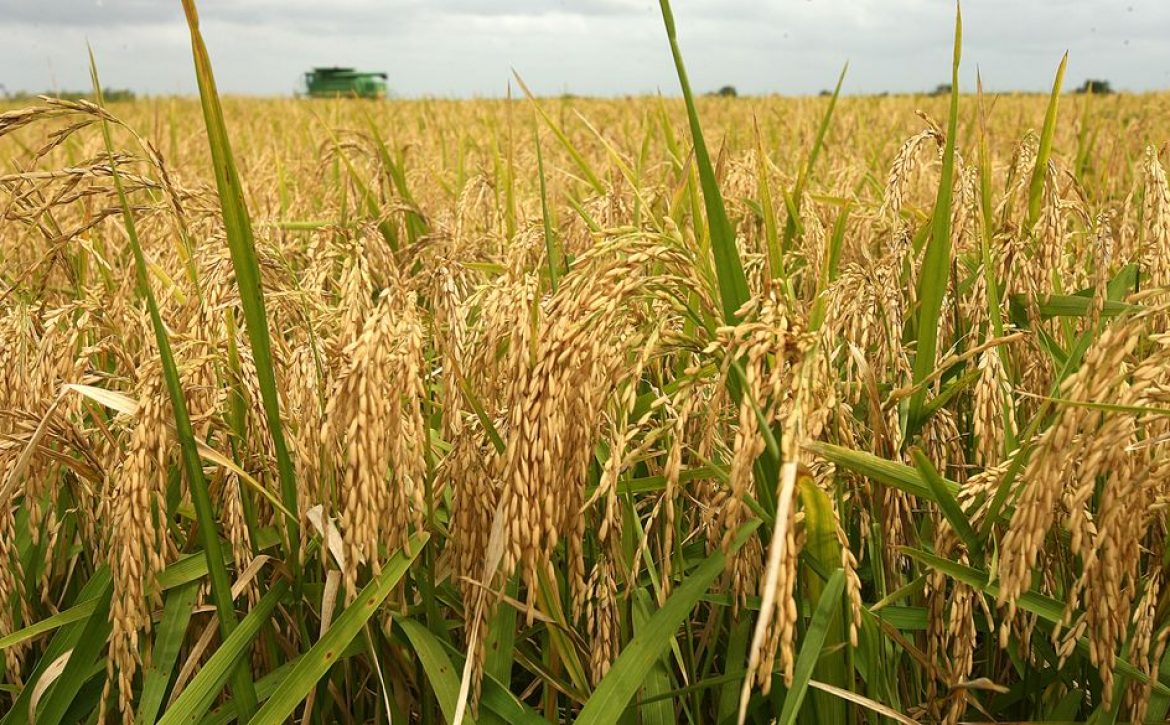
Golden rice ready for harvest under a wide sky — rice is one of Iragberi's signature crops
Egbedore · Osun State · South-West Nigeria

Iragberi

also known as Agberi — an ancient Yoruba town, a few kilometres from Ede

A farming town built on a thunderous legend. Iragberi's first king was nicknamed Ara — Thunder — and his title, Aragberi, is still carried today over fields of rice, cocoa and yam, a two-headed palm tree, and a people described wherever they are met as well read, widely travelled, and fiercely proud of home. Their rallying words: “Forward ever, backward never.”

≈ 80,000people call Iragberi home
7.783° N, 4.367° Ein the heart of Yorubaland
≈ 290 melevation above sea level
2014present Aragberi crowned

Cover photo: ripe rice in Osun State — the crop Iragberi is best known for today. Photo via Osun State Government.

At a glance


Everything a visitor, a researcher, or a son or daughter of the soil abroad needs first — the essentials, in one place.

Location
A few kilometres from Ede

Iragberi sits in Egbedore Local Government Area, whose headquarters is the town of Awo. Osogbo, the Osun State capital, is the regional hub beyond Ede.

Coordinates
7° 47′ N · 4° 22′ E
7.78306, 4.36667

Decimal latitude and longitude, as listed for the town. Paste them into any maps app to land on Iragberi.

People & language
Yoruba

A homogeneous Yoruba community of Oyo extraction, like the rest of Egbedore. Yoruba is spoken everywhere; English is widely understood. Christianity, Islam and traditional religion are all practised.

Government
Egbedore LGA · Wards Iragberi I & II

Egbedore was created in 1989 out of the old Ede Local Government. Iragberi returns two of the LGA's ten council wards. Egbedore's postal code is 232.

Livelihood
Farming first

Farming is the town's principal occupation — food crops for the pot and cash crops for market, with lowland rice a local speciality. See the harvest explorer below.

In town
Church, health centre & market life

Named landmarks include First Baptist Church, Iragberi, and the Osun State Comprehensive Health Centre, Iragberi — anchors of faith and care in daily life.

The story of Iragberi


How a migrant prince from the east became “Thunder” — and gave a town its name, its crown and its character.

Iragberi's first ruler was Oba Aara Akoni-Agogo, remembered as an emigrant from Ẹfọ̀n-Alààyè, a town to the east in what is now Ekiti State. Like so many Yoruba towns, Iragberi begins with a journey: a leader leaves an older settlement, gathers followers, and founds a new home in the forest belt west of the Ekiti hills.

The town's royal title preserves the drama of that founding generation. Aragberi is believed to come from the Yoruba phrase “Ara gba ori” — “Thunder has collected the head.” Tradition says the first king, nicknamed Ara (Thunder), earned the name in a confrontation bound up with the then Olu of Ibadan: he took the head of a man who had been tormenting the Ibadan ruler. Other retellings gloss the title more gently — “the thunder conquers,” or “we have settled here before” — but every version agrees on the essentials: this was a founder of force, and the town has carried his thunder-name ever since.

From that beginning, Iragberi grew as one of the historic towns of the Ede area — a farming settlement among sister towns such as Awo, Ara, Iwoye and Aato, tied by road, market, marriage and worship. When Nigeria's local government map was redrawn in 1989, the town became part of the new Egbedore Local Government Area, carved out of Ede.

Today Iragberi is counted among the major towns of Egbedore, home to roughly 80,000 people. Its sons and daughters are noted in profile after profile for the same two qualities: they are well read and well travelled — a small town with a diaspora, and a diaspora that keeps looking home.

Founding era

Aara Akoni-Agogo arrives from Ẹfọ̀n-Alààyè

The first ruler of Iragberi migrates from the east and establishes the town; his nickname “Ara” — Thunder — becomes the root of the royal title Aragberi.

1989

Egbedore LGA is created

Iragberi's local government, Egbedore, is carved out of the old Ede LGA, with its headquarters at Awo. Iragberi is organised into two council wards, Iragberi I and Iragberi II.

2014

A new Aragberi is crowned

Oba (Dr.) Folorunsho Agboade Makanju is crowned Aragberi of Iragberi, taking the style Ilufamiloye Osunsoko I — a coronation celebrated with traditional rulers and guests from across Osun.

2018

The doctor-king tells his story

In a widely read Guardian interview — “How I abandoned medical practice for community service” — the Aragberi explains leaving medicine to serve his town full-time from the throne.

Today

A rice town with a global family

Iragberi's lowland rice, cocoa and food crops feed the region, while its people — at home and across the world — document, celebrate and invest in the town's story.

The Aragberi — Iragberi's throne


One title, held across the centuries: from Aara Akoni-Agogo, the founder, to a medical doctor who traded his stethoscope for a crown.

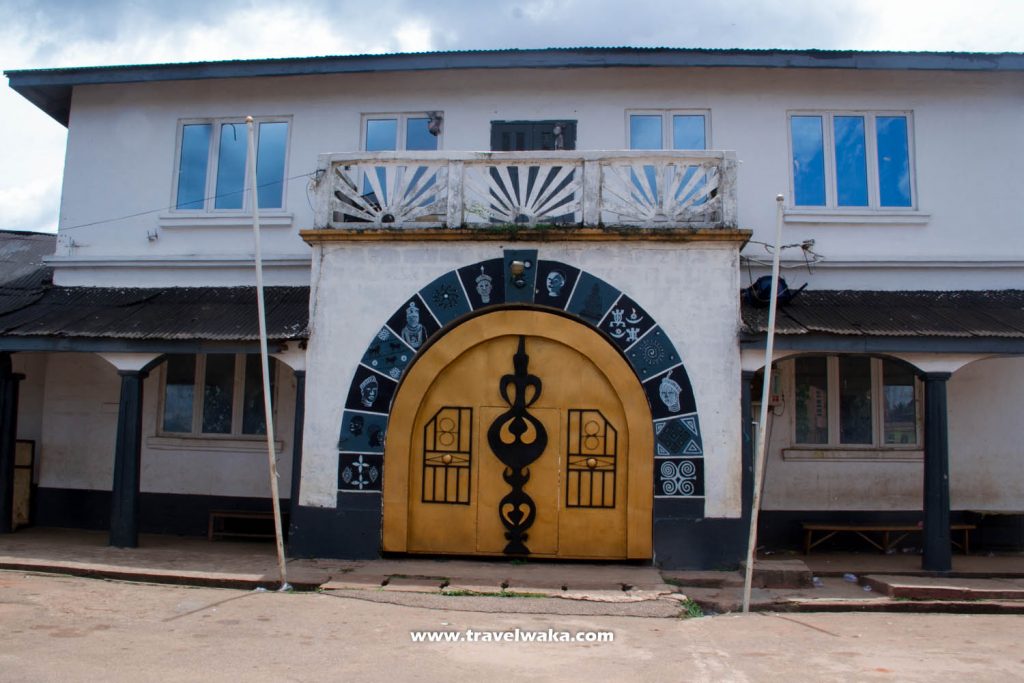
Ornate golden palace gates with Yoruba motifs at Ile-Oodua, Ile-Ife — an example of royal Yoruba palace architecture in Osun State
Yoruba palace gates at Ile-Ife, Osun State — the wider royal world Iragberi's throne belongs to. Photo: TravelWaka.
The incumbent · crowned 2014

Oba (Dr.) Folorunsho Agboade Makanju

Ilufamiloye Osunsoko I, the Aragberi of Iragberi. Unusually among monarchs, Kabiyesi came to the throne from the consulting room: he is a medical practitioner who, in his own words, abandoned medical practice for community service when the crown called.

That medical past still shapes his reign. At a continental conference against suicide hosted at Obafemi Awolowo University, Ile-Ife, the Aragberi argued that traditional rulers — closest of all leaders to the people — have the greatest role to play in ending suicide in Nigerian communities, and set about rallying fellow royal fathers to the cause. He has received honours for that advocacy alongside his work for the traditional institution in Osun.

Title: AragberiStyle: Ilufamiloye Osunsoko ICrowned: 2014Background: MedicineFirst holder: Aara Akoni-Agogo

See photos from the 2014 coronation →
Land & harvest


Farming is not what Iragberi does on the side — it is the town's principal occupation and its oldest identity. Tap a crop to explore what the land gives.

Heads of ripe rice heavy with grain in a field
Rice — the signature crop. Agricultural research on Osun rice lists Iragberi among the lowland-rice producing communities of Egbedore, alongside Ido, Iwoye, Ara and Origbo — and local profiles today give the town a leading reputation for rice.
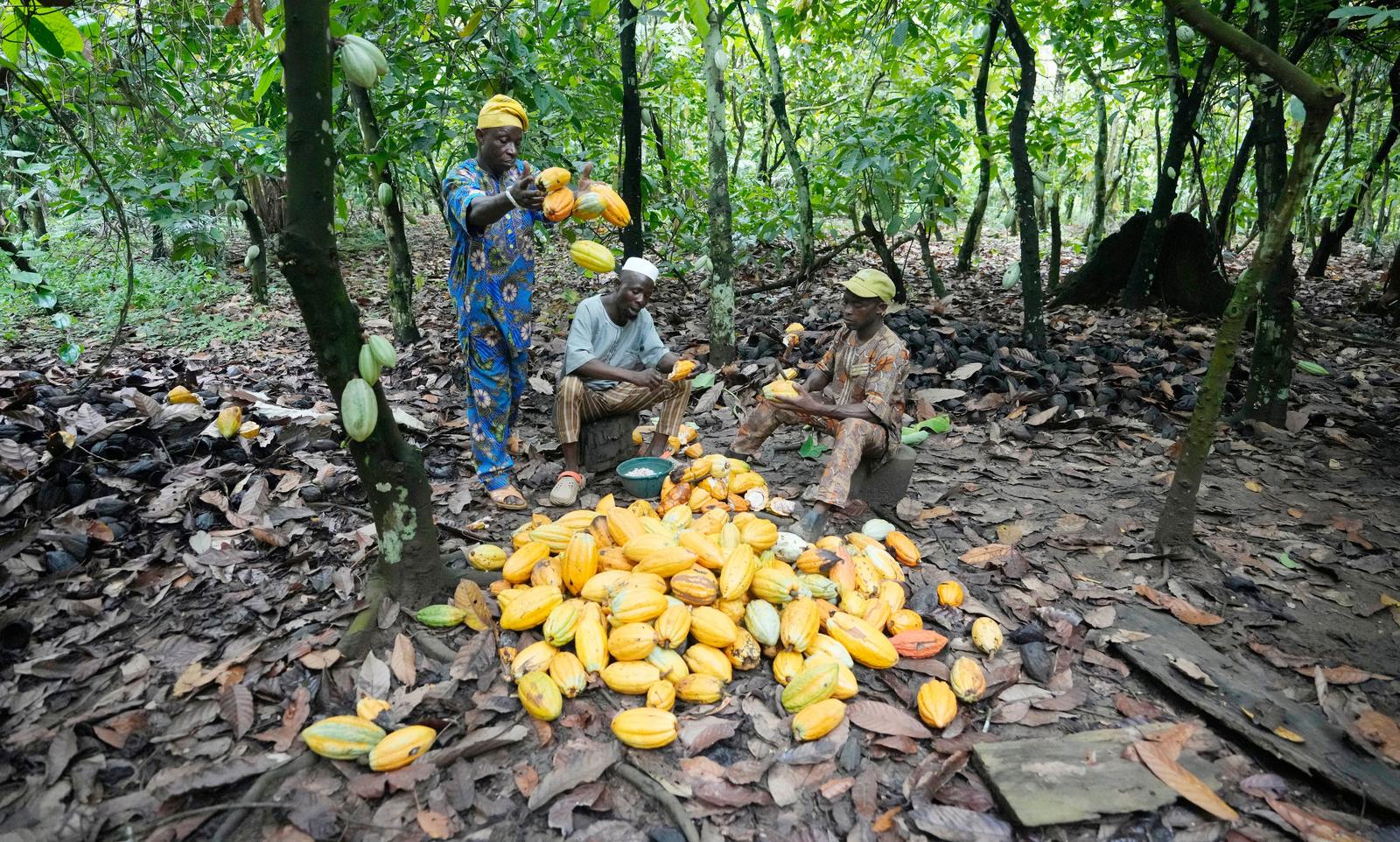
Farmers harvesting and opening ripe yellow cocoa pods under cocoa trees
Cocoa — the classic cash crop. Grown under forest shade across the Osun cocoa belt, cocoa has long linked farm towns like Iragberi to buyers and export markets far beyond Nigeria.

Town profiles also list coal production among Iragberi's economic activities — a reminder that the land's story runs below the surface as well as above it.

Sacred & curious: the heritage sites


Two sites are named in every account of Iragberi — one a botanical wonder, one a place of ancestral power. Both are described in current sources as no longer functional as tourist centres, which makes them less a photo stop and more a call for revival.

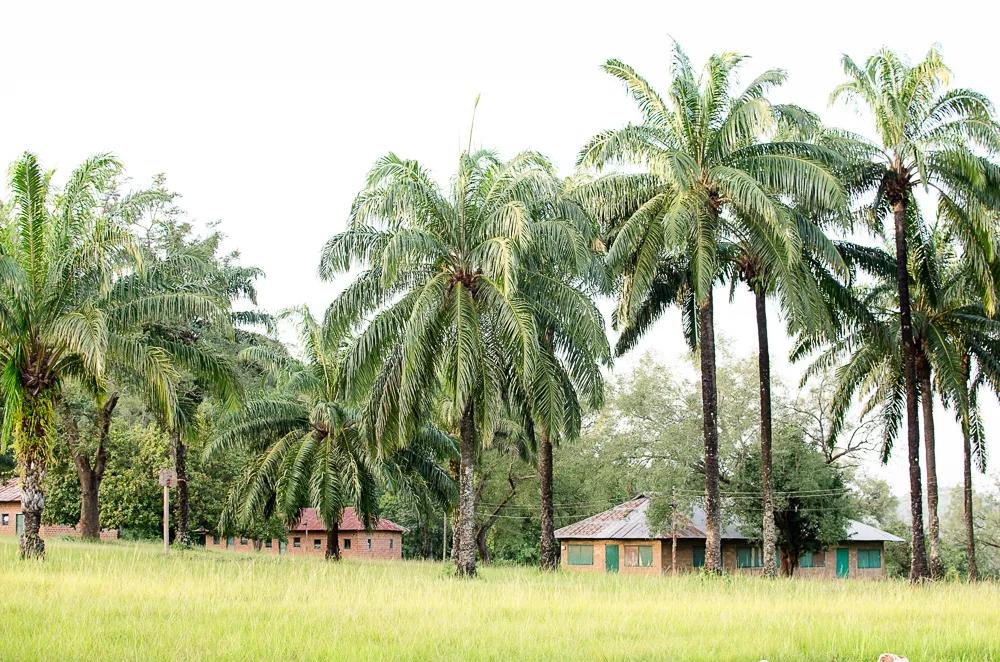
Tall palm trees rising over grassland and village houses in south-western Nigeria
Palms over village land in Nigeria's south-west — the landscape in which Iragberi's famous two-headed palm grew. Photo: Wonder & Wildness.
Wonder of nature

The Palm Tree with Two Heads

A single palm tree crowned with two heads — listed in Osun State's official-style inventory of historical attractions as the “Two Headed Palm Tree, Iragberi,” in Egbedore. Multi-headed palms are rare botanical curiosities, and this one became the town's best-known natural landmark.

Ancestral site

Woru Chain

A place of deep spiritual memory: tradition holds that one of Iragberi's powerful ancestors was inhumed here — concealed himself into the land — at Woru Chain. Sites like this anchor a Yoruba town's sense of continuity between the living, the land and those who went before.

Watch a documentary visit to Iragberi's mysterious sites →

An honest note

Heritage waiting to be revived

Wikipedia's town profile states plainly that Iragberi's two major tourist centres “are no longer functional.” For visitors today, that means: come for the living town — its markets, farms, churches, mosque-going neighbours in Ede and the warmth of its people — and treat the two-headed palm and Woru Chain as heritage to ask elders about, not attractions with gates and ticket desks. Restoring them is one of the clearest opportunities in Iragberi's story.

People & daily life


Friendly and calm, in the words of visitors; learned and travelled, in the words of every profile. This is how Iragberi lives.

Faith side by side

Christianity and Islam are widely practised across Egbedore, alongside traditional religion. In Iragberi, First Baptist Church is a named landmark — and a few kilometres away in Ede, one of Nigeria's most photographed central mosques rises over the rooftops.

Health & care

The Osun State Comprehensive Health Centre, Iragberi, serves the town's families — fitting for a community whose king is himself a medical doctor who campaigns on community health, including suicide prevention.

A town that travels — and returns

“The sons and daughters of this ancient town are well read and travelled.” Aerial photographers, storytellers and hometown associations now document Iragberi online, turning diaspora pride into a living archive of the town.

Say it in Yoruba — greetings & phrases

Yoruba is the language of home in Iragberi, and greeting is taken seriously — you greet elders first, and you greet them properly. Notice how many of these phrases begin with E: that is the respectful plural form, used when speaking to an elder or someone you honour. The plain forms (kaabo, o se) are for age-mates and juniors; adding the E turns the same words into a mark of respect. Learn these before you visit — then use the button to test yourself.

E kaabo
Welcome — the first words you'll hear on arriving.
E kaaaro
Good morning — the respectful form, for elders.
E kaasan
Good afternoon — respectful form.
E kaale
Good evening — respectful form.
Bawo ni?
How are you?
E ku ile
Greetings to the household — said to those you meet at home.
E seun / E se
Thank you — the respectful way to say it.
Ko tope
You're welcome — literally, “it's not enough to warrant thanks.”
E ku irin ajo
Welcome back — greetings to one who has returned from a journey; safe travels.
Kábíyèsí o!
“Your Majesty!” — the proper greeting for the Aragberi and other Yoruba kings.

Neighbouring towns

Iragberi keeps company with a ring of historic Yoruba towns. Tap any name to find it on the map.

Diaspora & notable indigenes


Iragberi's sons and daughters are described, wherever they are met, as well read and well travelled. These are the indigenes whose names and records are documented in public sources — at home, across Nigeria, and around the world.

Stephen A. Oyelami

Educationist · world record holder

An Iragberi-born educationist who was part of the team that set the Guinness World Record for the Longest Marathon Reading Aloud by a Team — 431 hours, 31 minutes and 25 seconds of continuous reading, certified on 16 October 2025. Governor Ademola Adeleke of Osun State publicly congratulated him on 23 December 2025.

Source: Osun State Government.

Anna Adeola Makanju

Vice President of Global Impact, OpenAI

Vice President of Global Impact at OpenAI (previously its VP of Global Affairs). Before tech, she served as Special Adviser to then Vice President Joe Biden and as Director for Russia at the U.S. National Security Council. She was named to the Devex Power 50 for 2026 and congratulated by President Bola Tinubu on 6 February 2026.

Career record: State House (Presidency) statement, 6 Feb 2026. Community sources identify her as a Princess of Iragberi and daughter of the Aragberi — that link is community-identified.

Dr Adelani Folasayo Ogunrinade

Veterinary parasitologist

Born on 14 July 1950 in Iragberi-Ede. A veterinary parasitologist at the University of Ibadan, he was a research fellow at the Harvard School of Public Health in 1984–85 — an Iragberi scholar on the world academic stage a generation before the internet made such journeys visible.

Hon. Adeola Olusola Ogungbile

Non-Executive Director, LivingTrust Mortgage Bank

Described in his profiles as an illustrious son of Iragberi. He serves as a Non-Executive Director at LivingTrust Mortgage Bank, and was educated at Seventh Day Adventist Grammar School, Ede, the University of Ife, and Lagos State University.

Olori (Dr.) Omolola Makanju

Wife of the Aragberi · education champion

The wife of the Aragberi, she inaugurated the YEDIS International Day of Education celebration in Iragberi on 24 January 2026 — the event that brought 500+ students from across Egbedore together in the town.

Prince Aderinto Abiola

Prince of Iragberi · YODEI Coordinator

An Iragberi prince and coordinator of YODEI, he provided the venue and mobilised participants for the YEDIS International Day of Education event held in Iragberi in January 2026.

“Forward ever, backward never — Iragberi.”

That is the motto Iragberi's people attach to their town — and it travels with them. The sons and daughters of this ancient town are well read and travelled: scholars, record-breakers, bankers, public servants and professionals on several continents, who still call a farming town near Ede home. If you are an indigene — at home or abroad — this page is part of your archive too: the story above is yours to keep telling, and the gallery below is waiting for your photographs of the town itself.

Community photos


The photographs already gathered for this site — every one captioned with its true location. None of these is presented as a picture of Iragberi itself unless the caption says so; they show the town's crops, its landscape, and its wider Yoruba world.

Watch — Iragberi on video


One documentary about Iragberi has been found on YouTube — this is it. It visits the town's double-headed palm tree, its sacred locations and its history on camera.

The one Iragberi documentary on YouTube

“Mysterious Yoruba Town Where the Gods Are Angry | Iragberi !”

By Ojeleye Olaoluwa Samuel. A documentary visit to Iragberi exploring its double-headed palm tree, its sacred locations — including the world of Woru Chain — and the history behind them. It is the only video about Iragberi itself found on YouTube; films about other Yoruba towns are not Iragberi, and are not presented here as if they were.

Watch it on YouTube →

Find & visit Iragberi


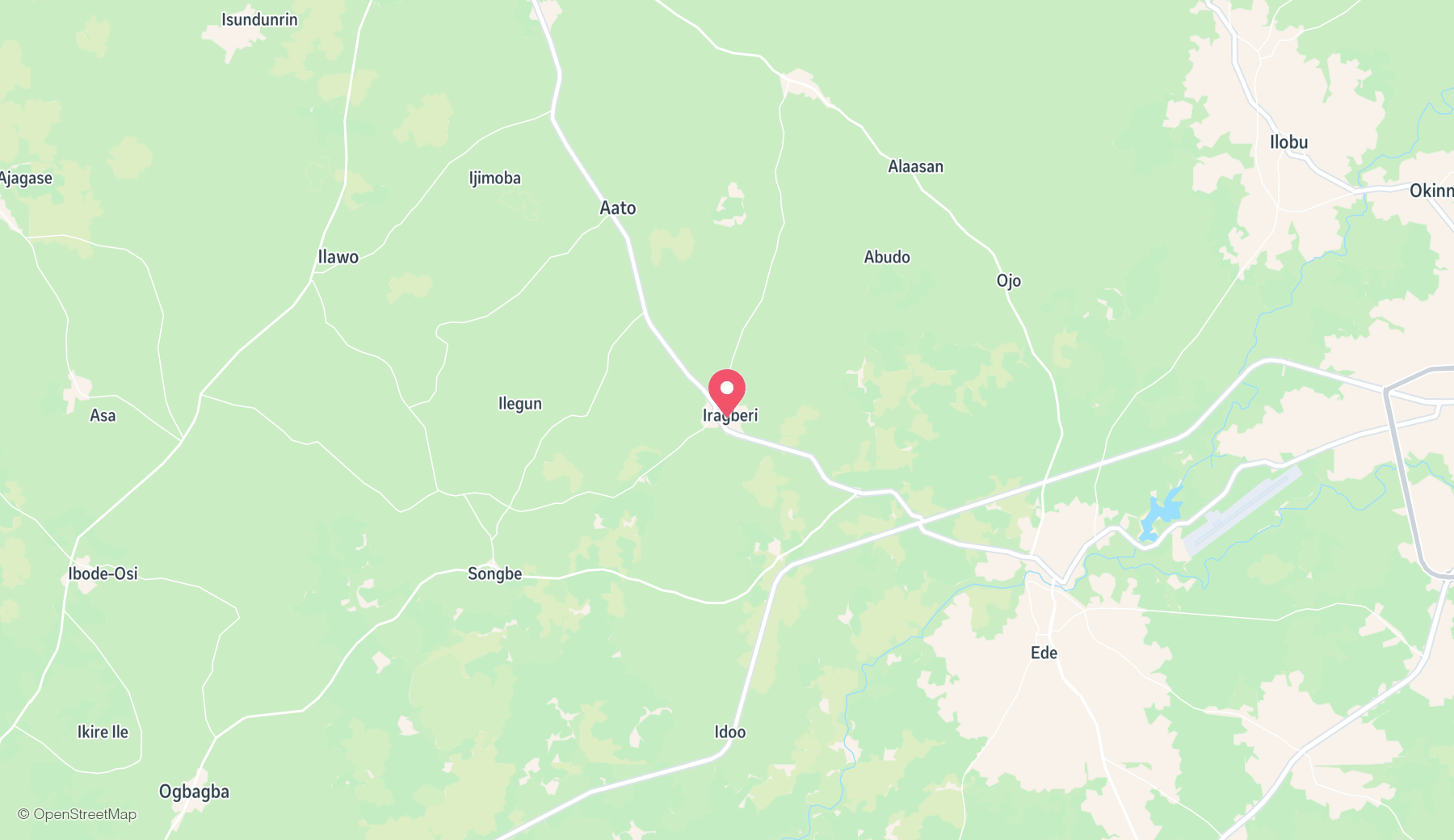
The pin below is Iragberi itself. Most journeys arrive through Ede — the town a few kilometres away, visible at the lower right of the map — on the road network that links Egbedore to Osogbo and the rest of Osun.

Map of Iragberi and its surroundings, showing Ede to the south-east and Aato, Ojo and Idoo nearby

© OpenStreetMap contributors, Map Data Legal Notices

Directions to Iragberi Open in maps

  • 1 · Iragberi town centre

    7.78306° N, 4.36667° E · Egbedore LGA, Osun State. Market, homes, churches and the Comprehensive Health Centre.

    View on map →
  • First Baptist Church, Iragberi

    A named landmark of the town, listed among notable places in the area.

    Find the church →
  • Osun State Comprehensive Health Centre

    The town's public health centre — first port of call for care in Iragberi.

    Find via town map →
  • Make a day of the area

    Pair Iragberi with Ede — its central mosque and Timi's city — or continue to Osogbo, the state capital, and Ile-Ife, the spiritual home of the Yoruba.

    Osogbo →  ·  Ile-Ife →
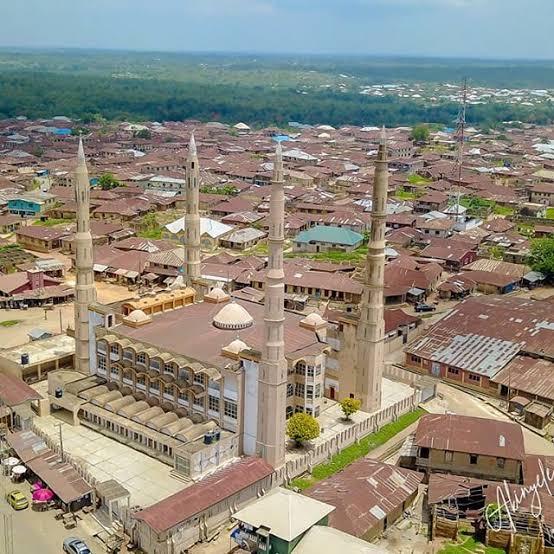
Aerial view of Ede Central Mosque and the dense rooftops of Ede, a few kilometres from Iragberi
Next door in Ede: the Central Mosque above a sea of rooftops — the view that greets you on the short road between Ede and Iragberi. Photo via Muslim Voice Nigeria.

Before you go

Greet elders first, and greet the palace properly — Kábíyèsí o! Ask before photographing people, farms or sacred places, and ask locally about the two-headed palm and Woru Chain: their stories live with the town's elders more than with any signpost.

What to taste & take home

This is food country: rice from Iragberi's own lowlands, yam, maize and beans from its farms, and cocoa and kola nut from its groves. Market days are the best introduction to the town — arrive hungry and curious.

Questions people ask


Where exactly is Iragberi?

In Egbedore Local Government Area of Osun State, south-western Nigeria — a few kilometres from the city of Ede, at approximately 7.783° N, 4.367° E and about 290 metres above sea level. Its local government headquarters is at Awo.

What does “Aragberi” mean?

It is the title of Iragberi's traditional ruler. Tradition derives it from “Ara gba ori” — “Thunder has collected the head” — recalling the first king, Aara Akoni-Agogo, nicknamed Ara (Thunder). Other glosses you'll encounter are “the thunder conquers” and “we have settled here before.”

Who is the current king of Iragberi?

Oba (Dr.) Folorunsho Agboade Makanju, styled Ilufamiloye Osunsoko I, crowned in 2014. A medical doctor by training, he left practice for community service on ascending the throne.

What is Iragberi known for?

Farming — above all lowland rice, plus cocoa, coffee, cassava, maize, beans, yam and kola nuts — and two storied heritage sites: a palm tree with two heads, and Woru Chain, where a powerful ancestor is said to have concealed himself into the land. Both sites are currently described as no longer functional as tourist centres.

How many people live in Iragberi?

About 80,000, per the town's current encyclopedia profile; older editions of the same profile gave roughly 50,000, reflecting the town's growth. Egbedore LGA as a whole counted 73,969 people in Nigeria's 2006 census.

Which towns are near Iragberi?

Ede, Awo, Iwoye, Ara, Aato, Ejigbo and Inisa are named as neighbours. A little further afield sit Osogbo, the Osun State capital, and Ile-Ife — close enough to combine into one journey through Yoruba history.

Coordinates copied